
What is Chanoyu
800
Years of tea culture
Eight centuries of tea culture,
made present in a bowl today
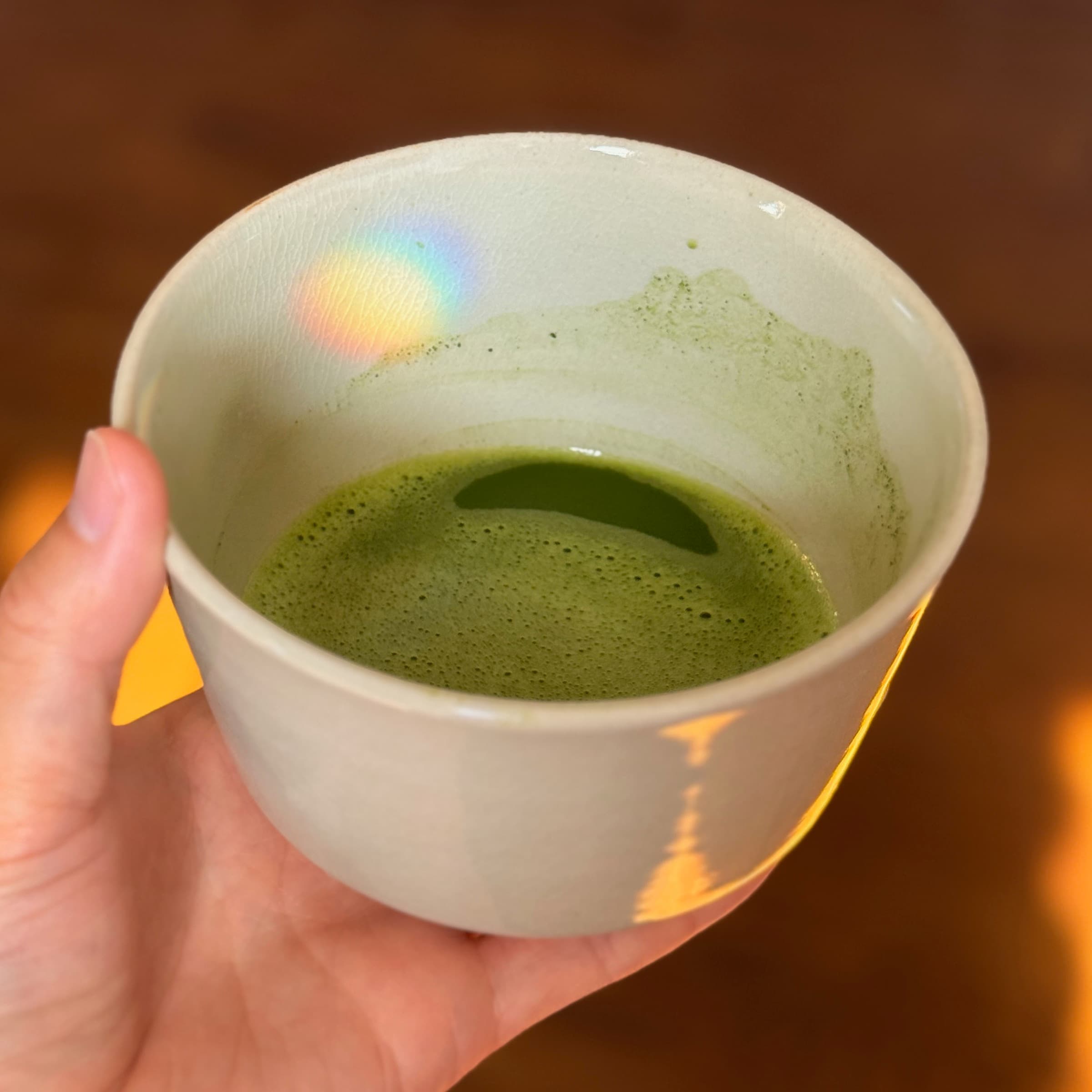
Chanoyu brings Zen awareness, samurai discipline, and everyday hospitality together in the simple act of making tea.
Across eight centuries, it has refined three ways of being: finding stillness, noticing the season and the natural world, and seeing beauty in what is simple and unshowy.
10
Lessons
800 years of practice,
made yours in 10 lessons
More than a way to make tea, it is a practice you can carry into everyday life—at home, at work, wherever you are.
Explore the 10 LessonsThe Course
How the practice unfolds
Three stages, each opening the next—from receiving tea as a guest, to preparing it yourself, to entering the full practice of the tea room.
Trial Lesson
Begin as a guest
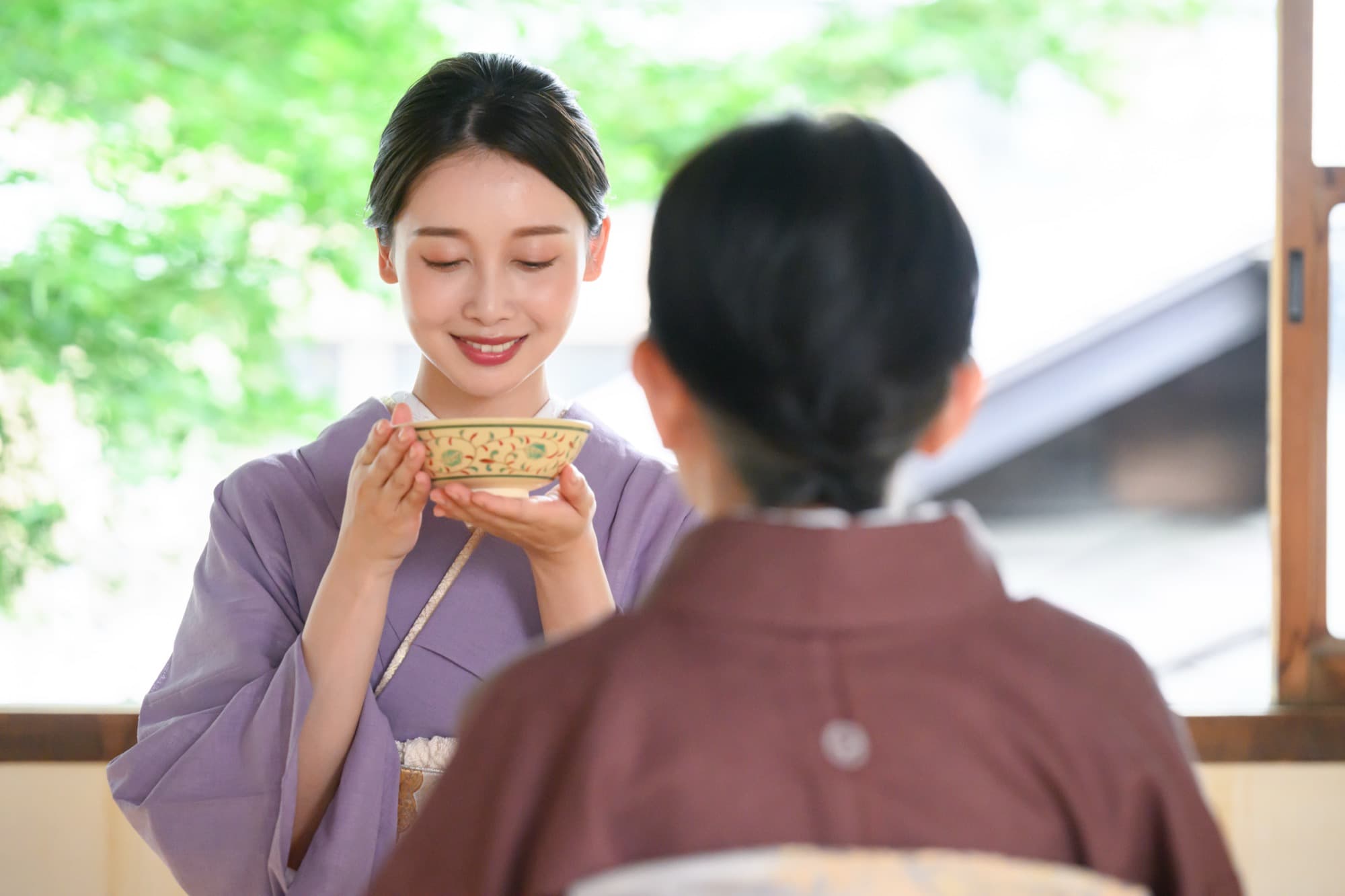
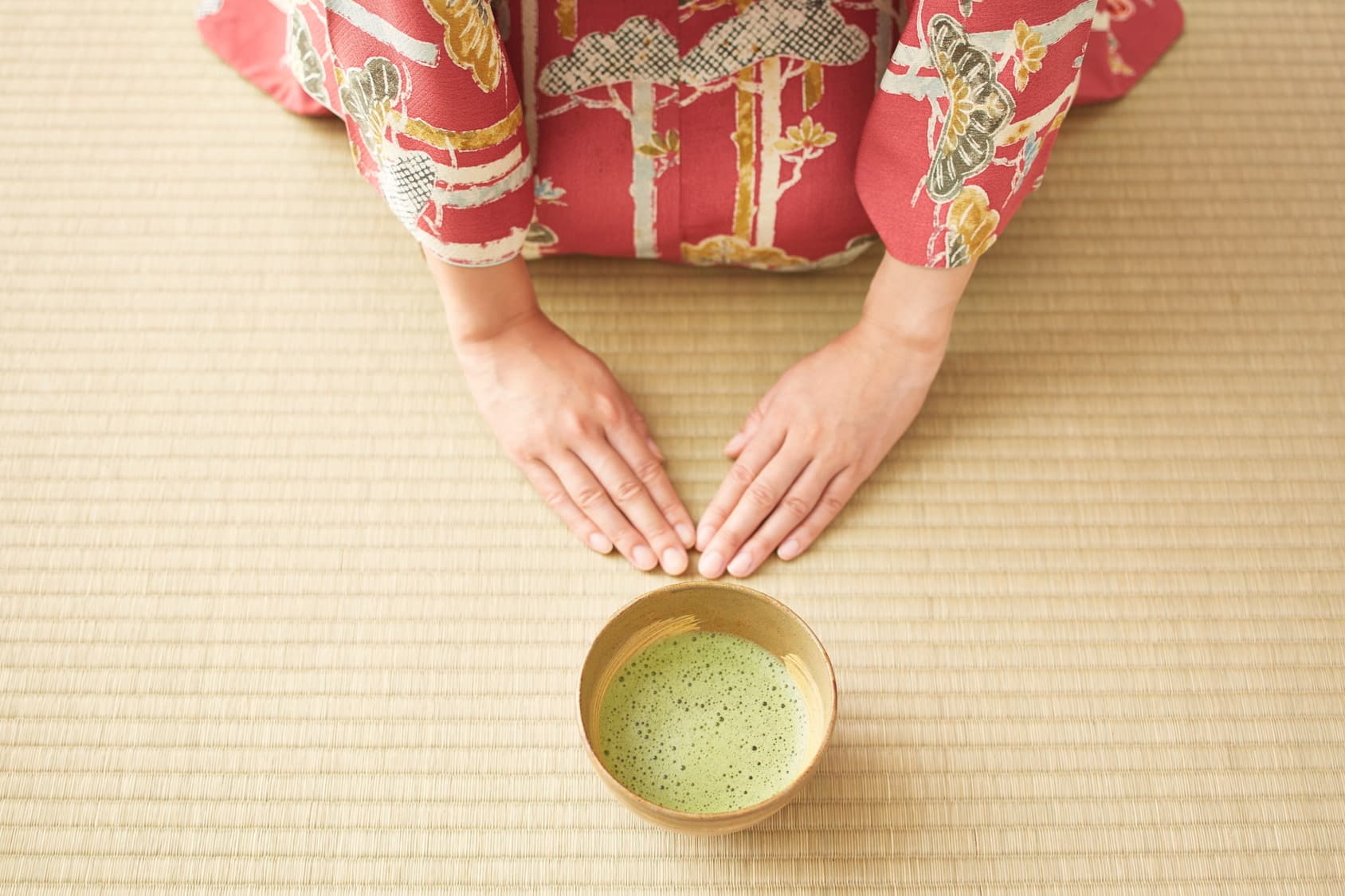
In one visit, learn the essential movements of a guest: how to enter and sit in a tea room, how to bow, and how to receive and drink a bowl of matcha. It is a complete introduction—and the first step toward making tea yourself.
The 10 Lessons
Make the practice your own
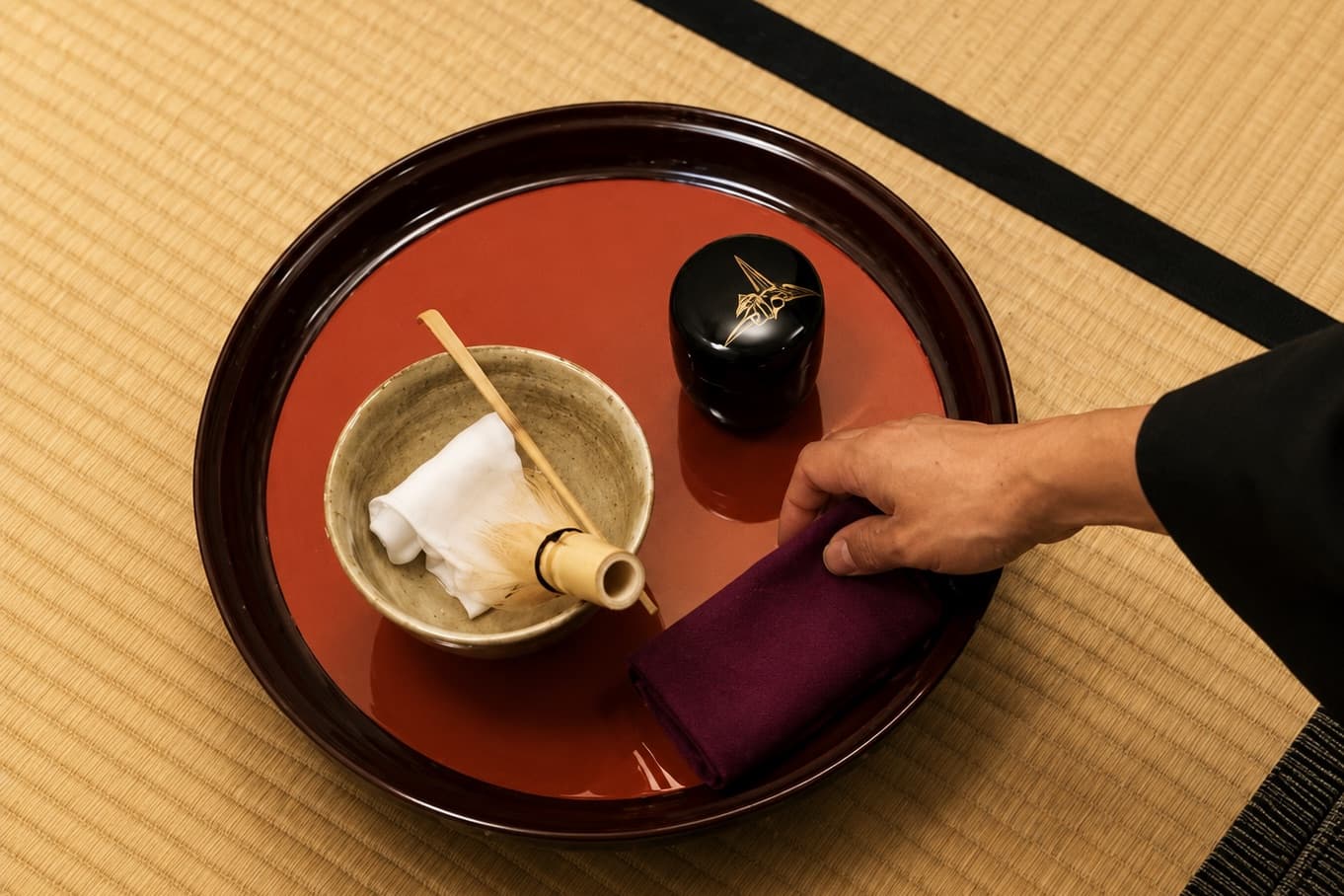
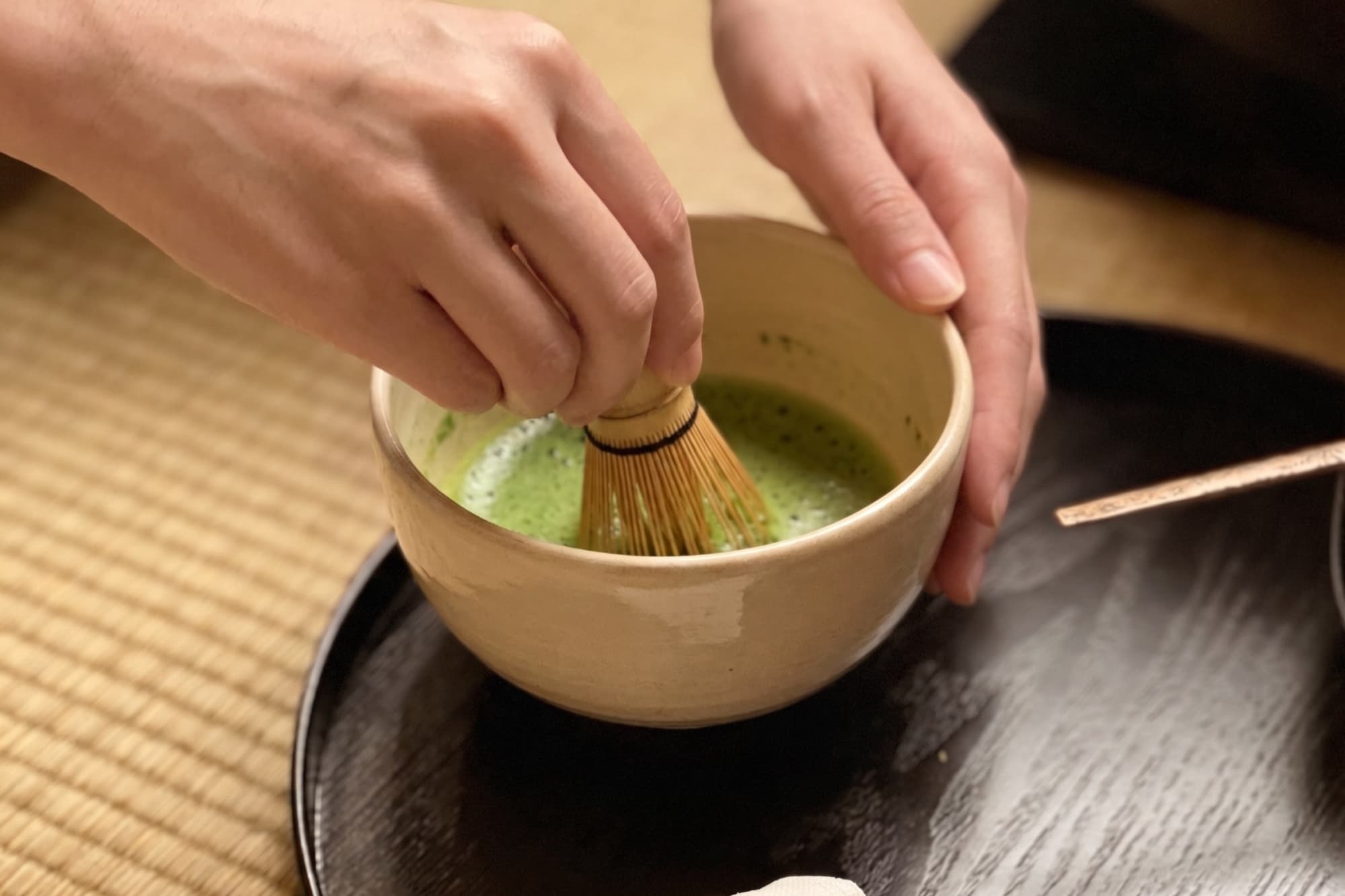
Over the 10 Lessons, learn bon-temae—the complete tray-style preparation—step by step. By the final lesson, you can perform the sequence from memory and carry its quiet into your home, your workday, or wherever you make tea.
- Lesson 1
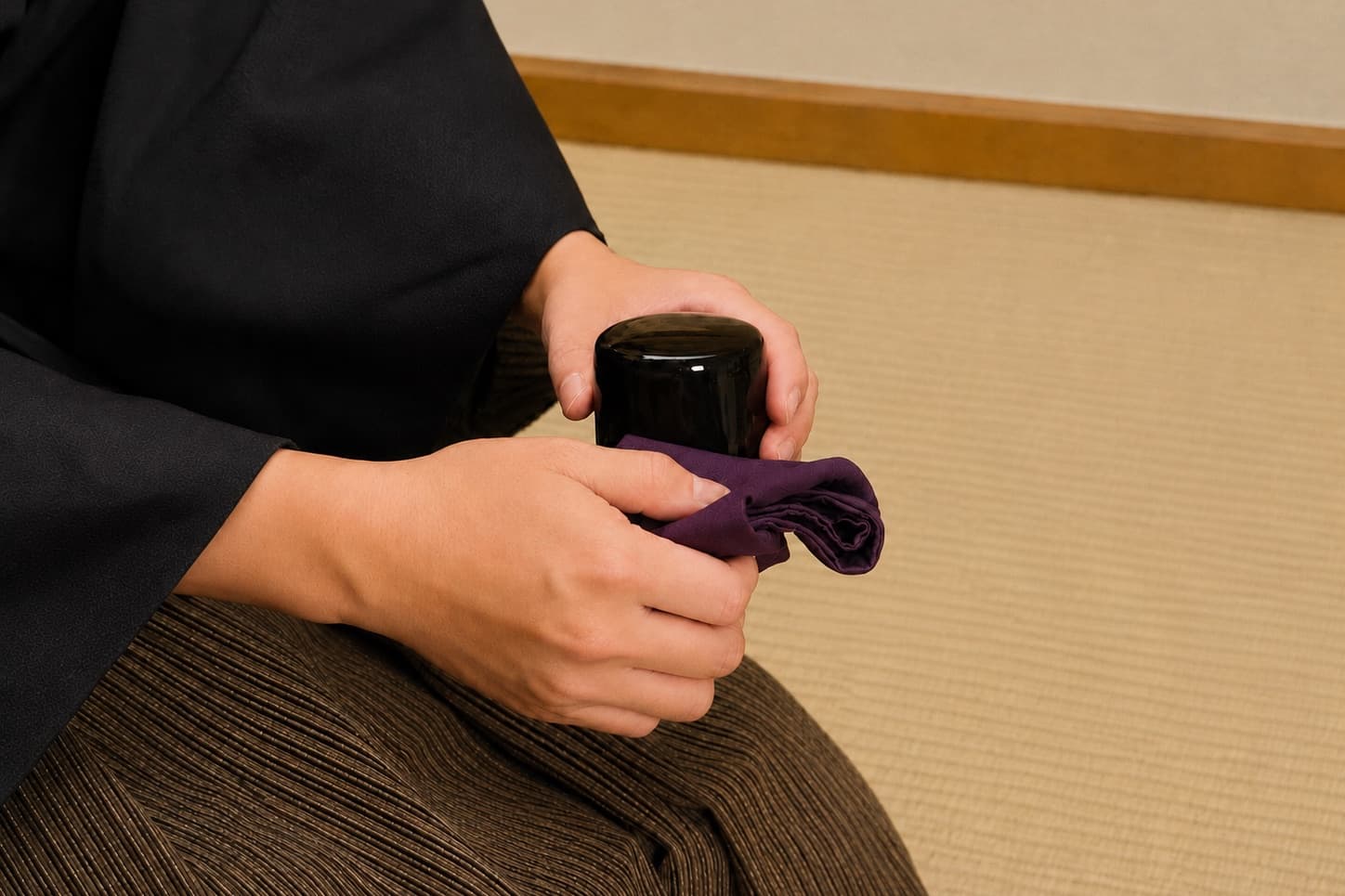
Purifying the natsume and chashaku
- Lesson 2
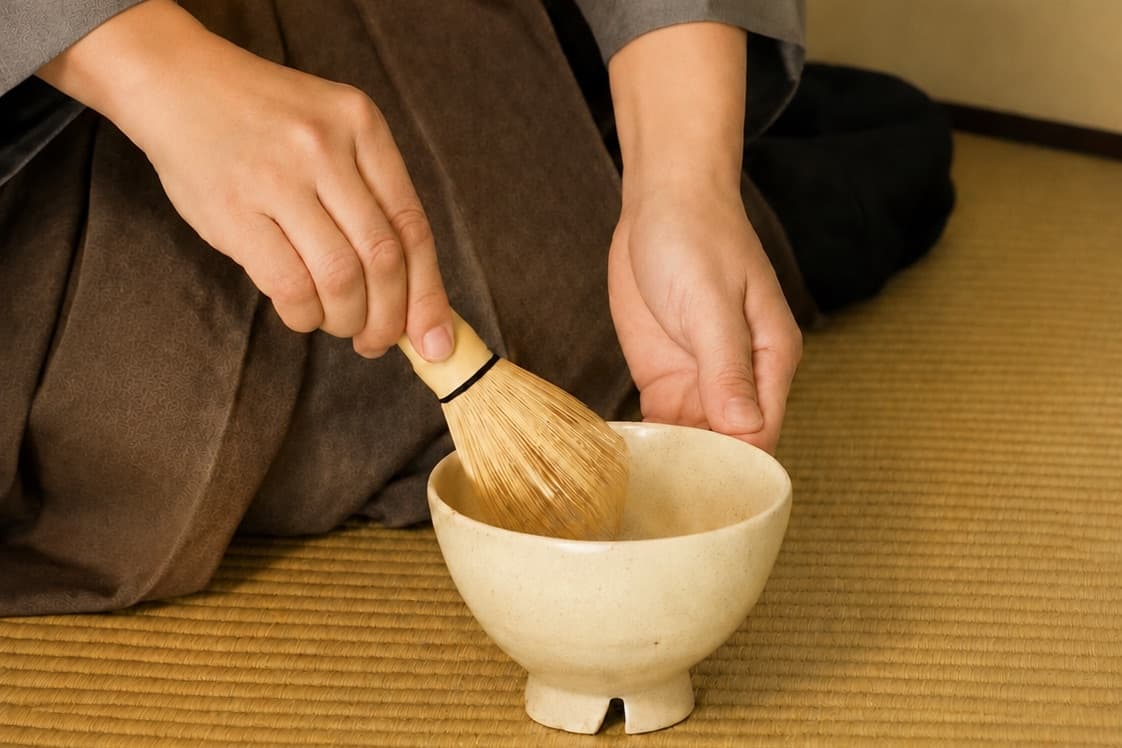
Preparing the chasen in hot water
- Lesson 3
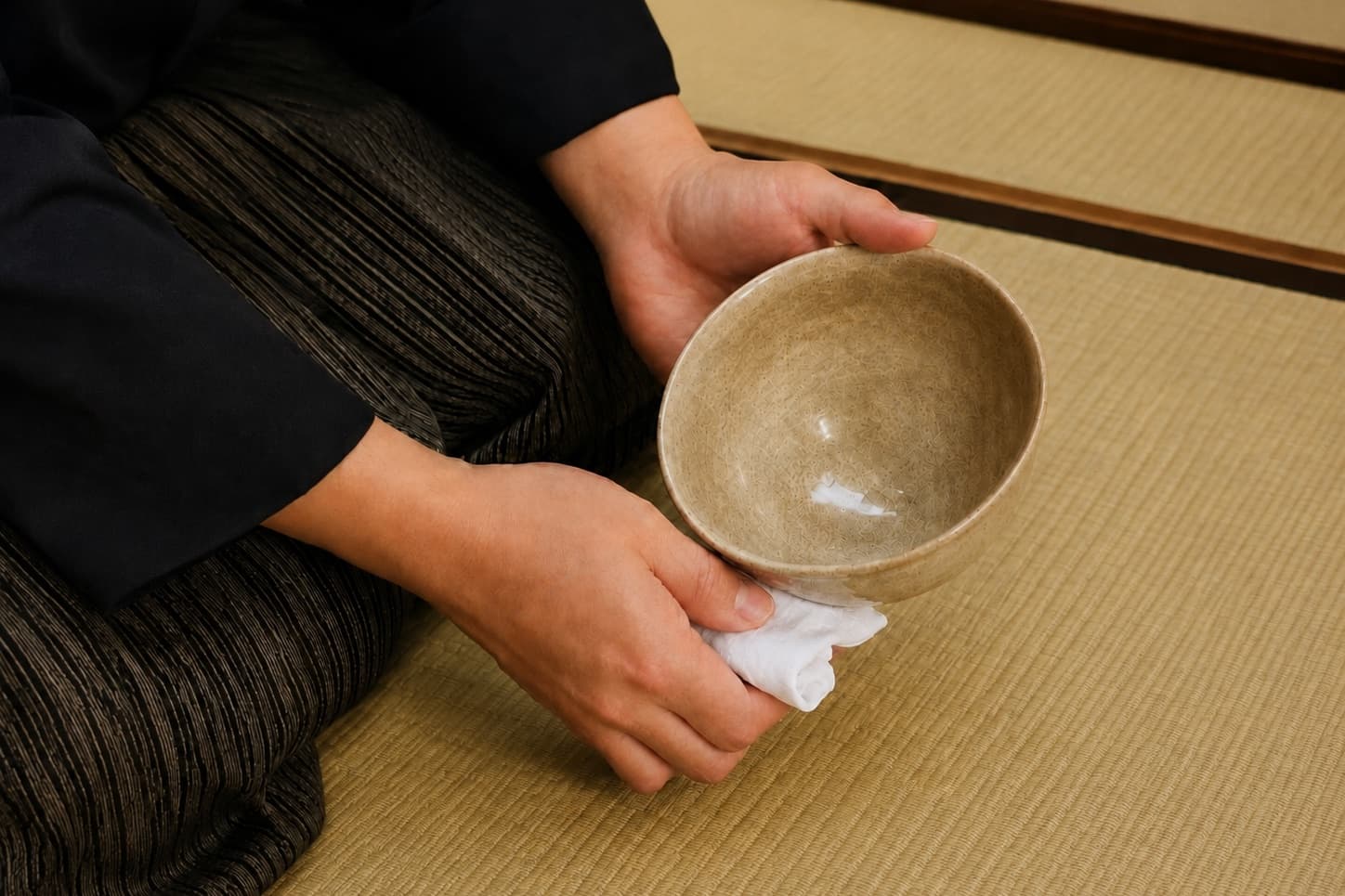
Folding the chakin and purifying the chawan
- Lesson 4
Whisking a bowl of matcha
- Lesson 5
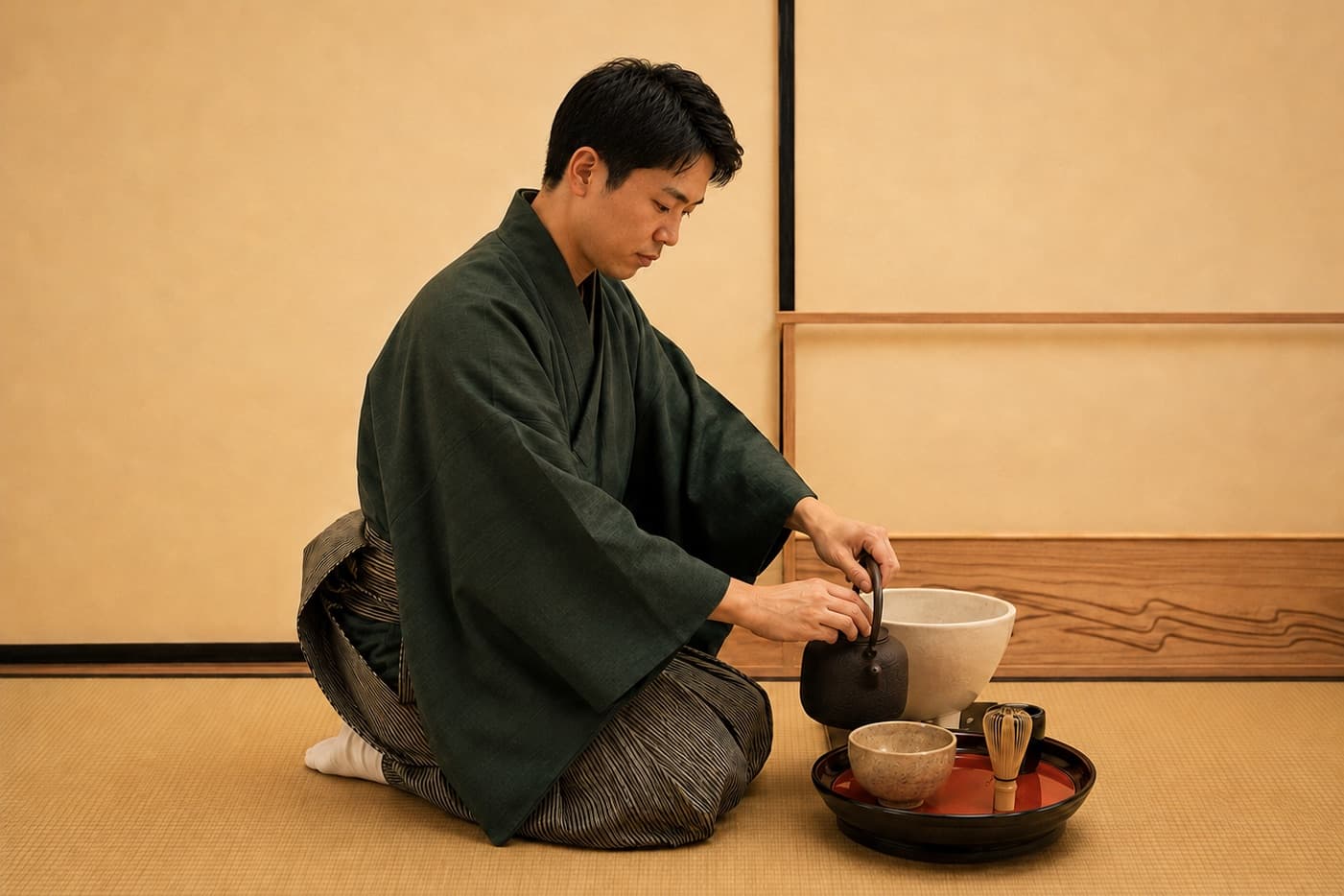
The first half, from start to finish
- Lesson 6
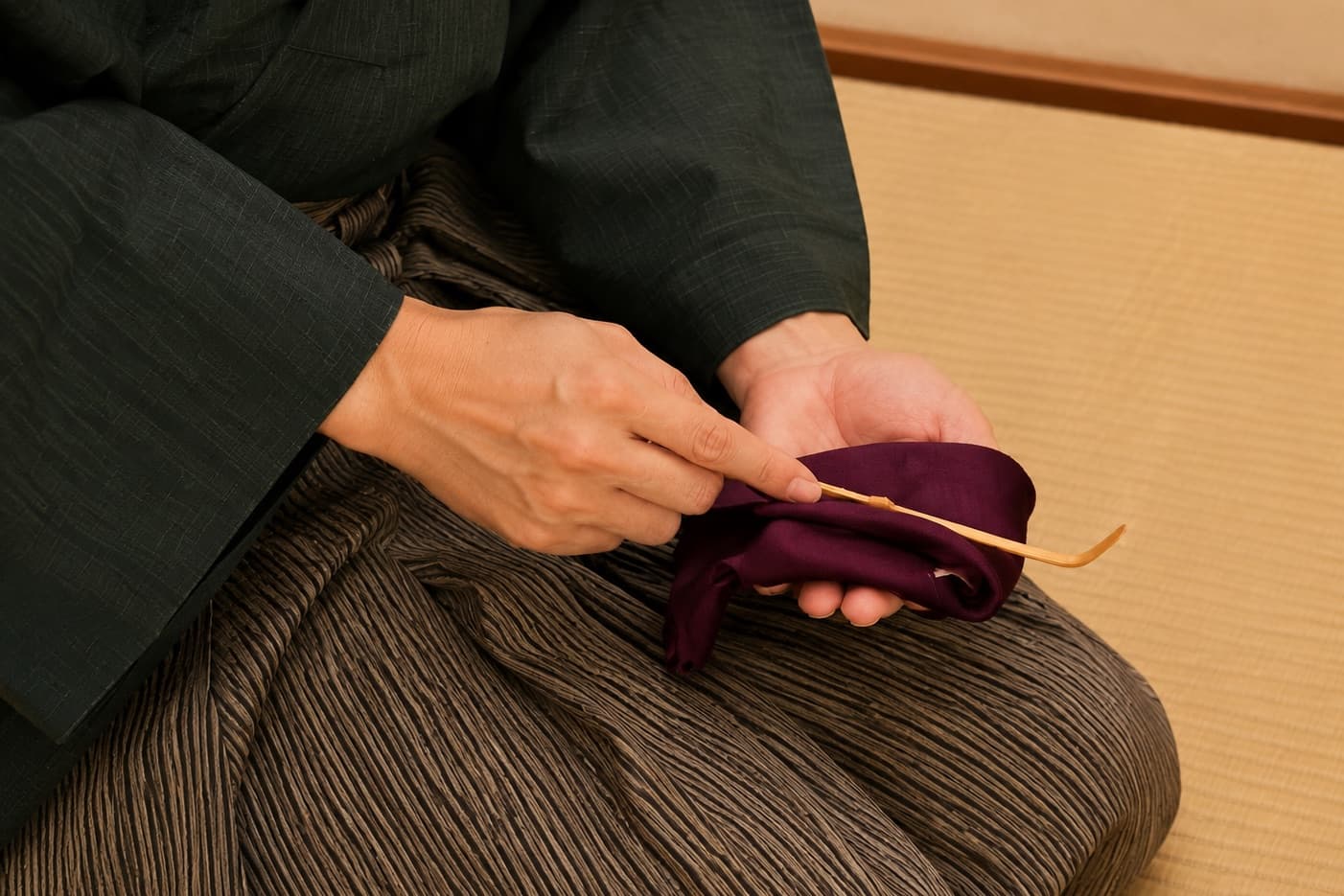
Purifying the chashaku and rinsing the chasen
- Lesson 7
Learning the second half
- Lesson 8
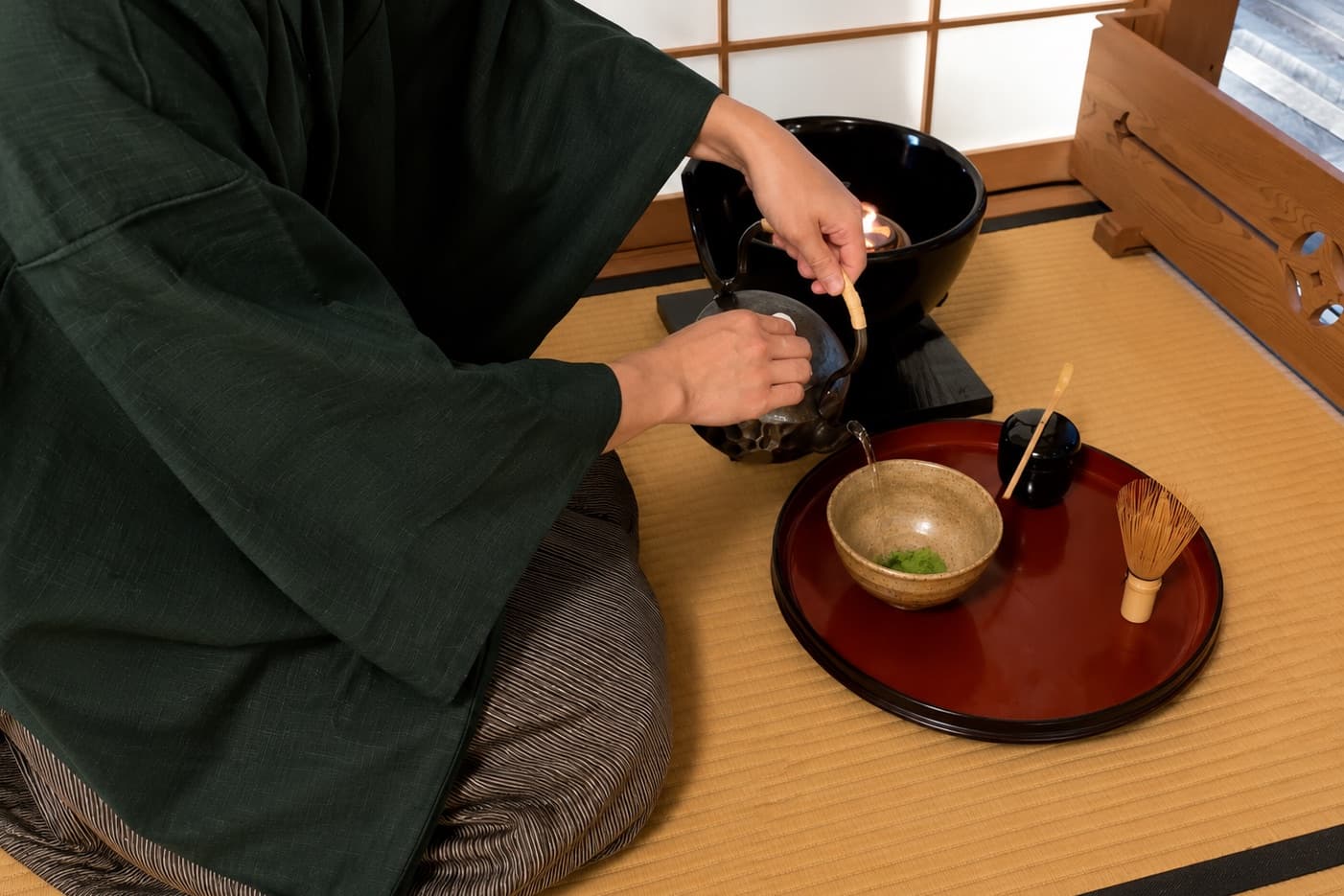
The second half, from start to finish
- Lesson 9
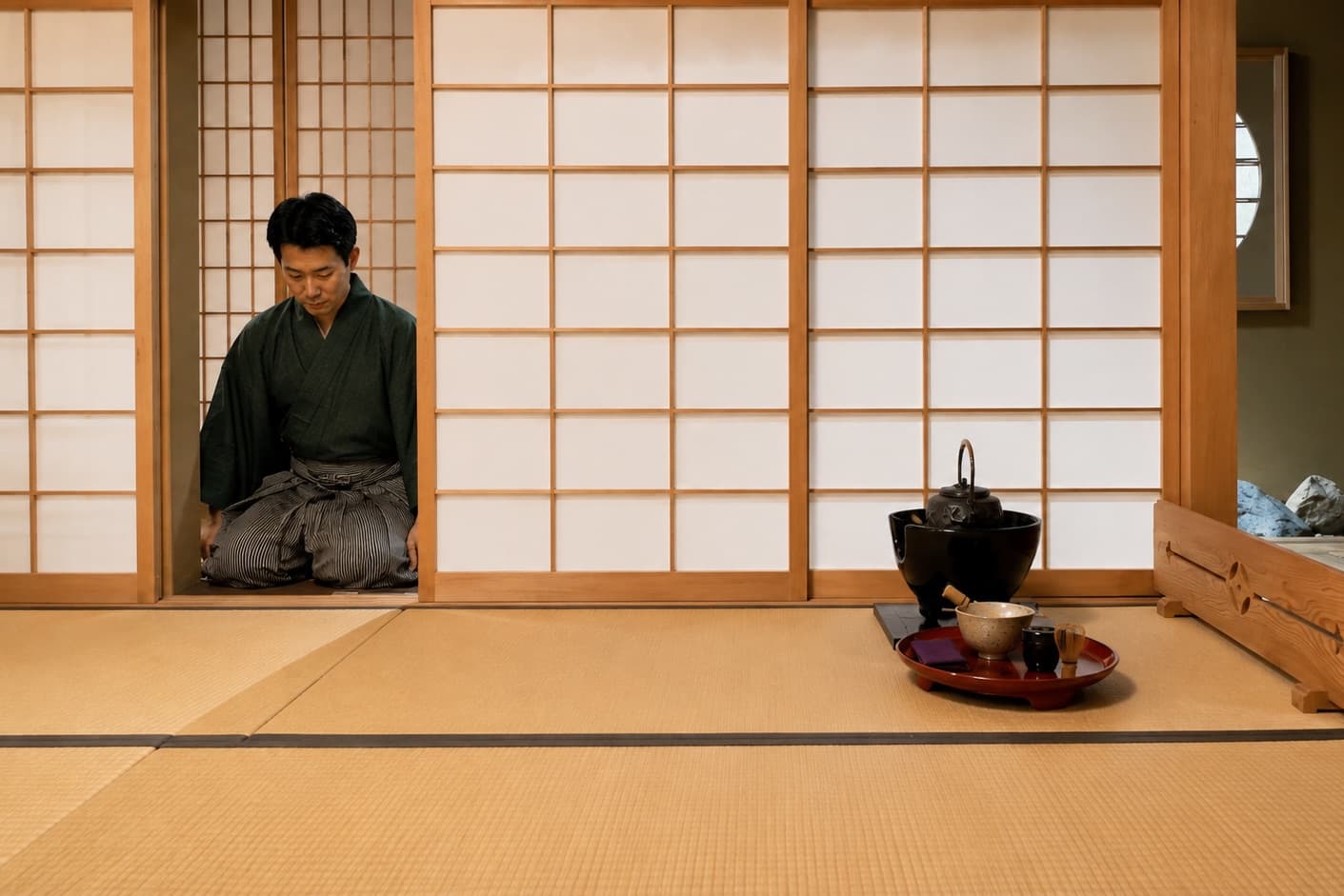
Putting the full bon-temae together
- Lesson 10
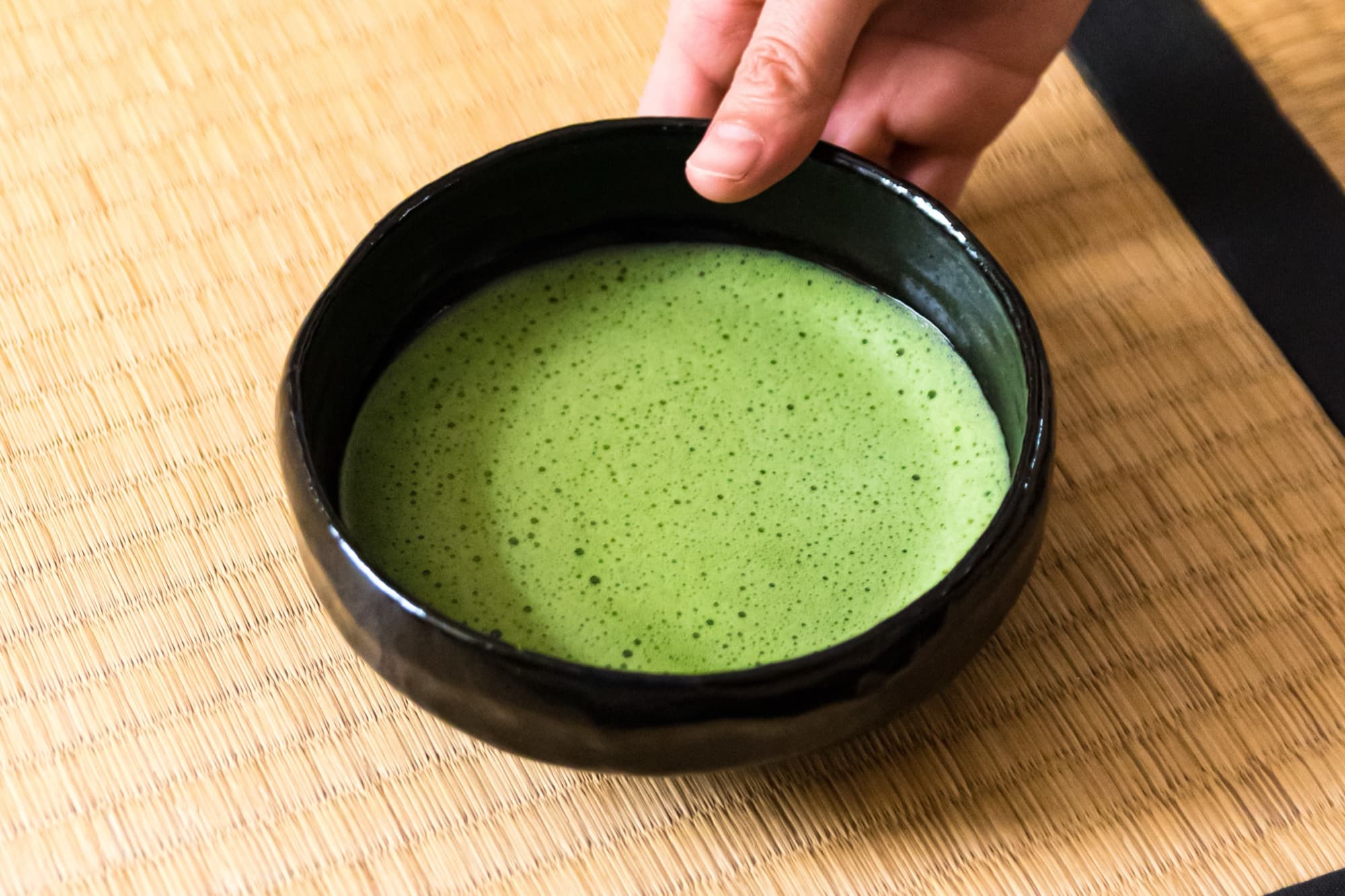
Performing the full bon-temae from memory
Advanced Practice
Enter the full tea room
Continue into the full tea-room setting, using the furo brazier, kettle, and fresh-water jar, while going deeper into the philosophy, history, and aesthetics that shape chanoyu.
Inside one lesson
2 hours,
as both host and guest
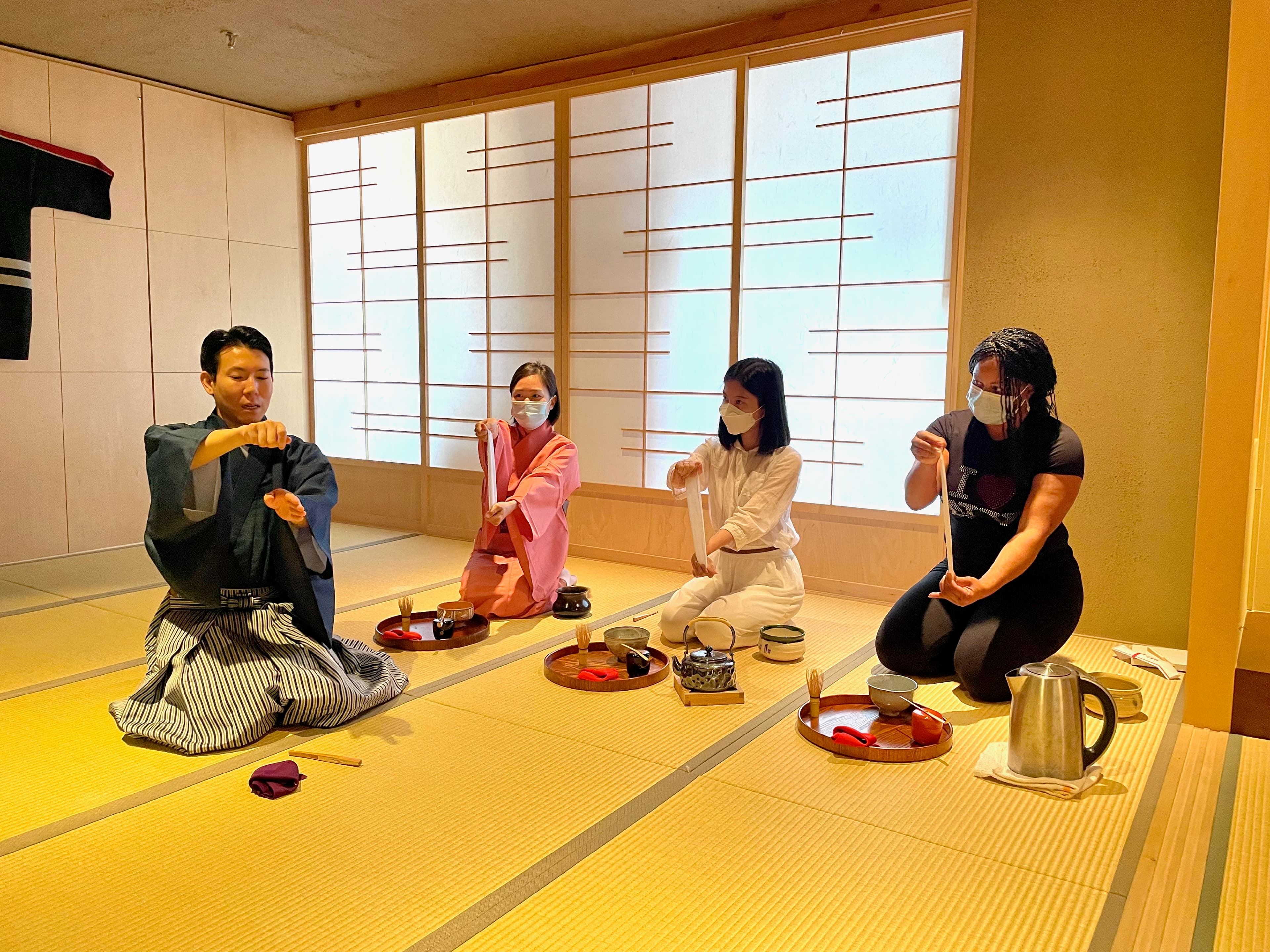
A tea ceremony has a host and guests, and each role is an art. Every lesson gives you the experience of both.
- First
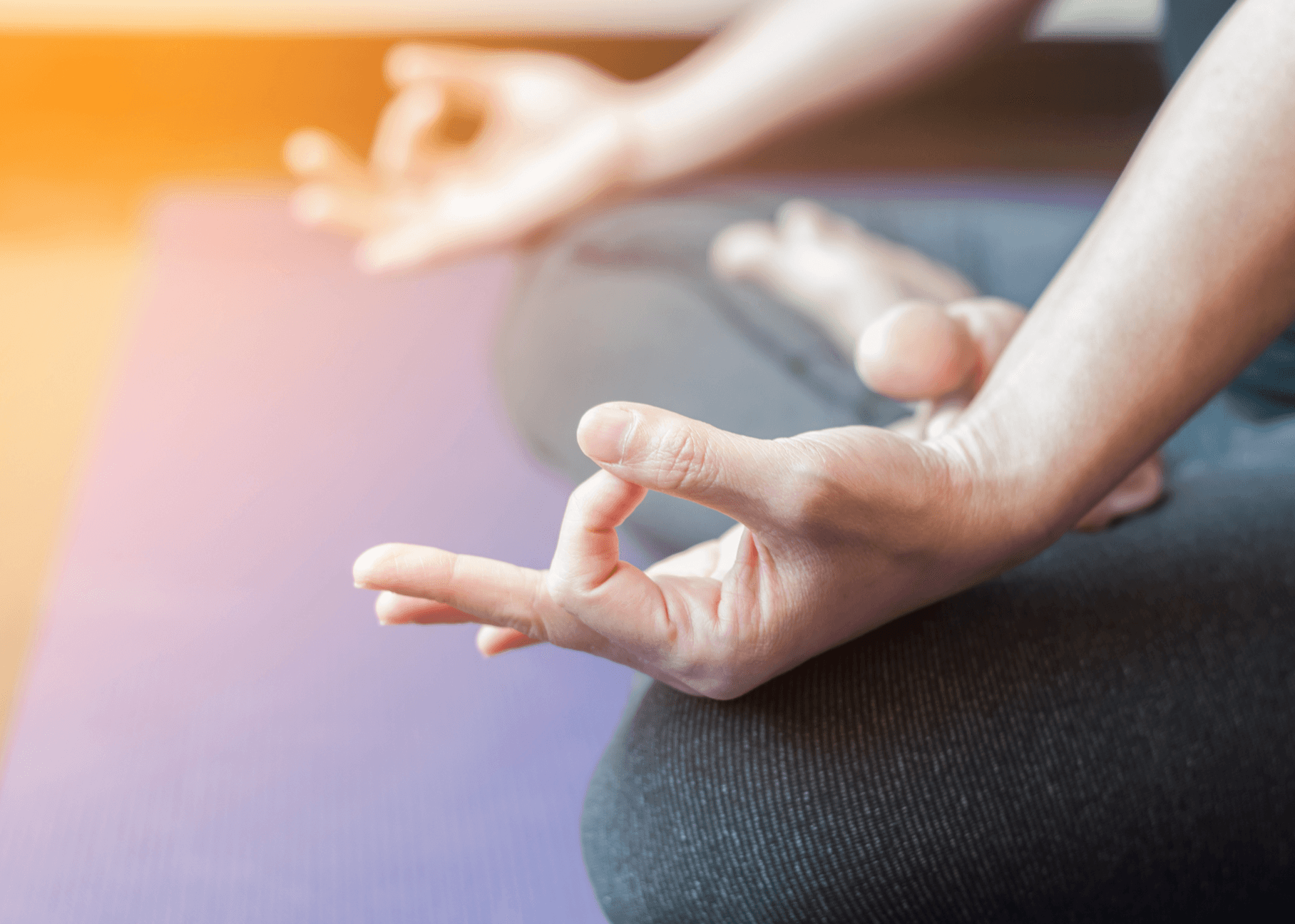
- Five minutes of zazen—seated meditation—to arrive and settle. Then a short talk on the season, the scroll in the alcove, a Zen teaching, or the story behind a utensil.
- Then
- Practice as both host and guest. One student prepares the tea while the others receive it with sweets. Then the roles change until everyone has experienced both.
- Last
- A reflection on the day’s practice, followed by time for every question—why this bow, why this order, why the bowl is turned. Nothing is too basic.
Why here
Taught from inside the practice
Chanoyu is not simply studied. It is learned through close guidance, steady practice, and direct experience of real tea ceremonies.
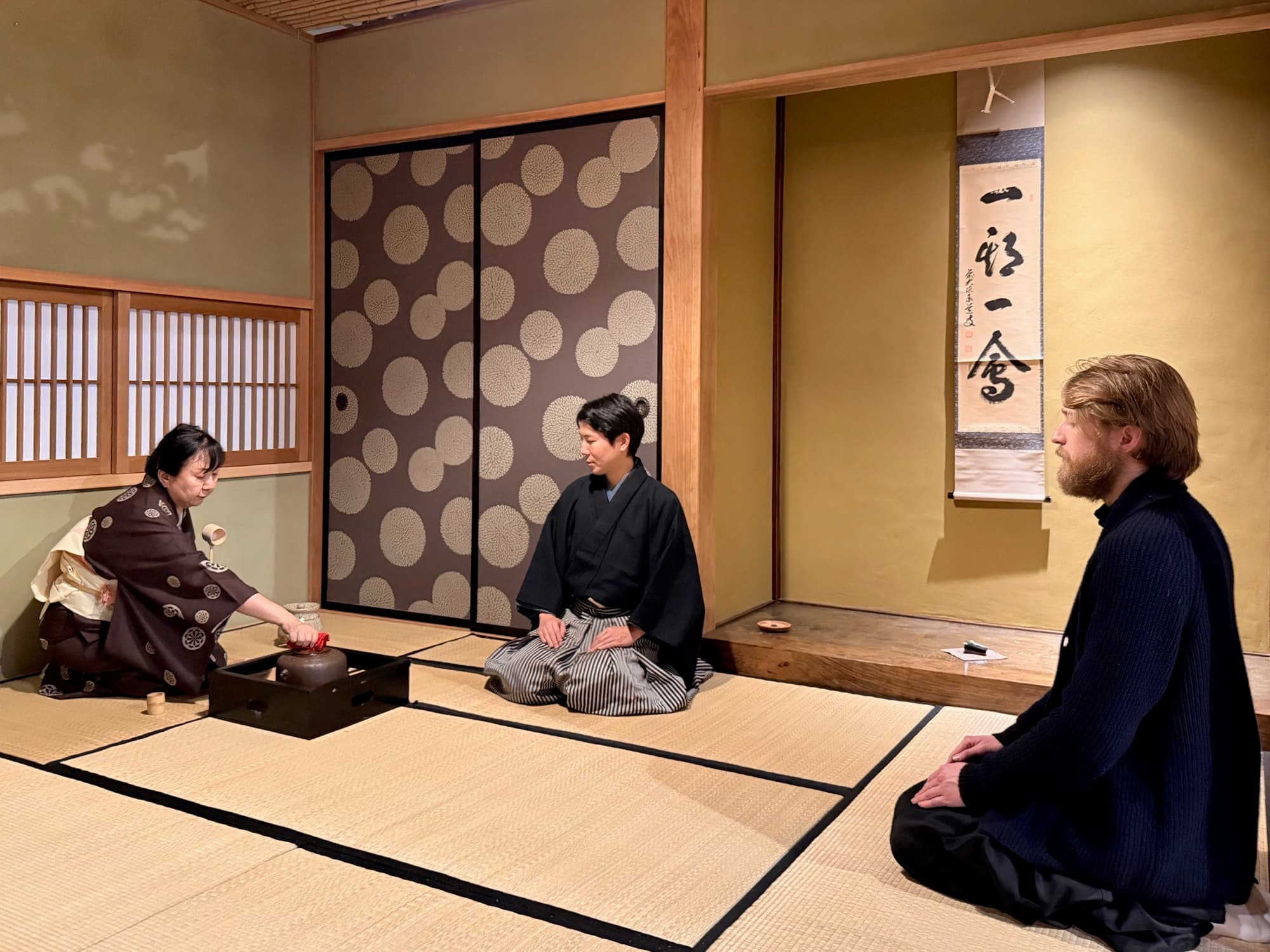
The guidance
Close enough to ask anything
Small, semi-private classes allow every movement to be seen, corrected, and explained. Yoshitsugu Nagano teaches from his active practice of chanoyu, offering guidance grounded in real tea ceremonies.
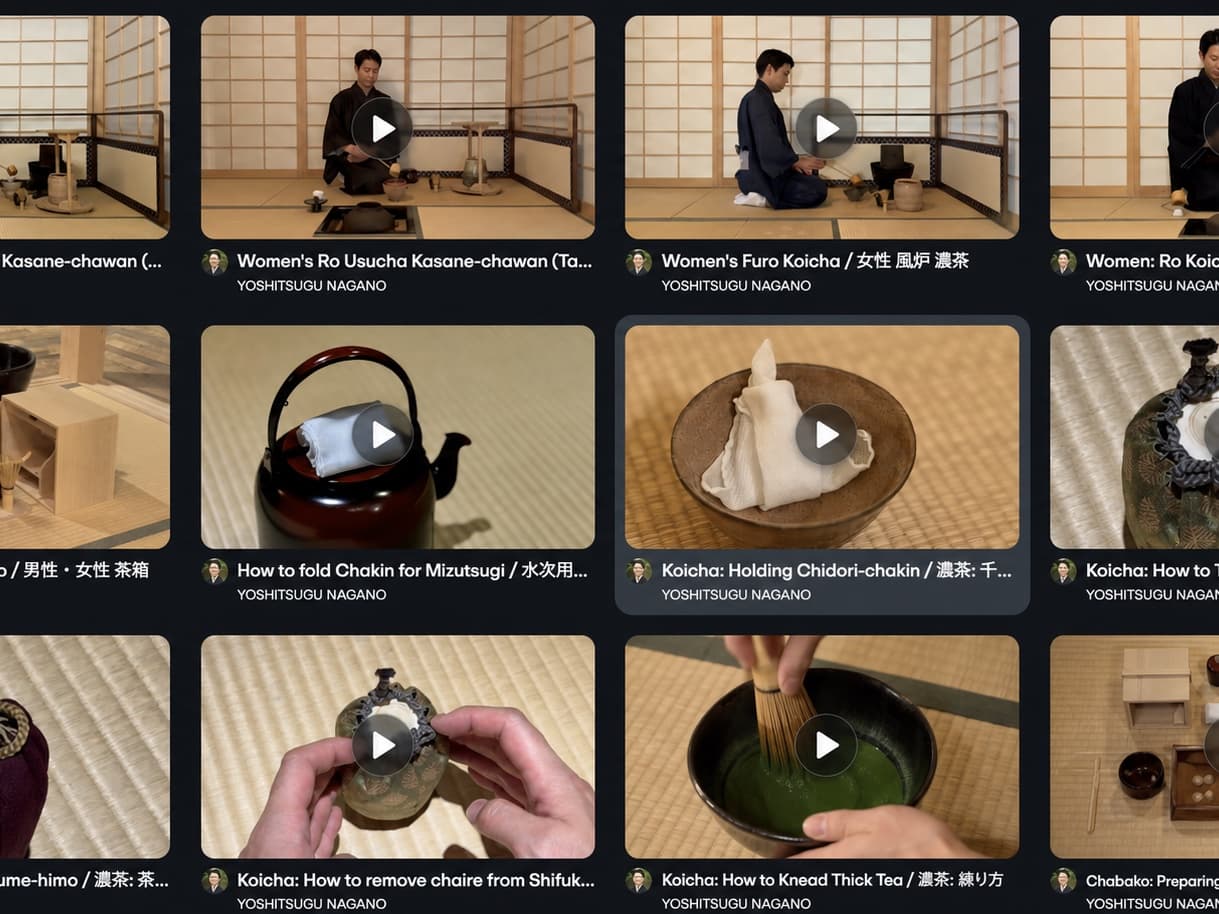
The practice
It continues beyond the weekly lesson
Detailed video materials help you review each procedure at home. Special practice sessions and chaji — the full-length formal tea ceremony, with a meal — offer the rare opportunity to learn its complete structure here in New York.
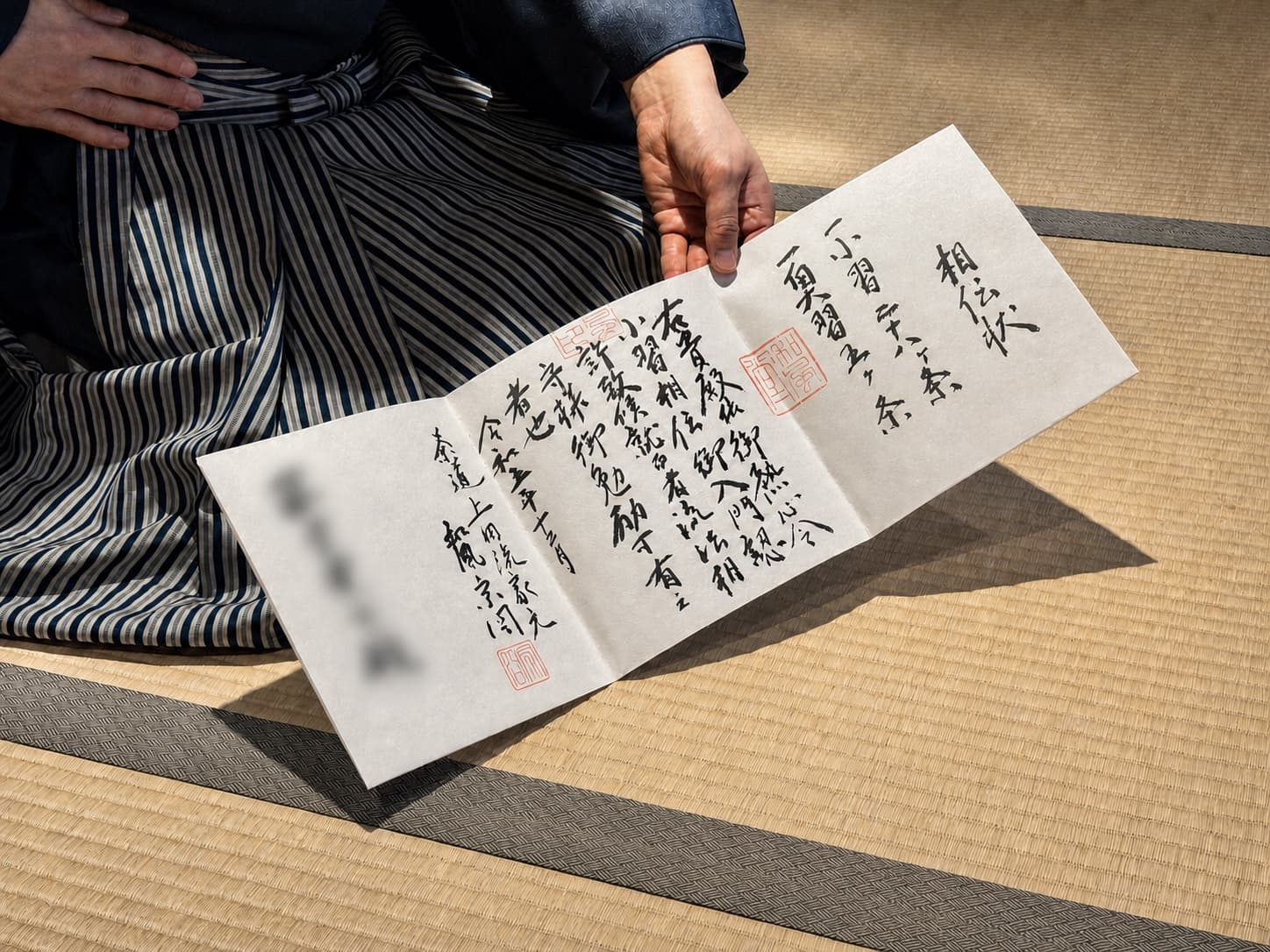
The path
From your first bowl to a formal license
Begin with no prior experience and continue into advanced study. As your practice develops, you may become eligible to apply for licenses from Ueda Sōko Ryū, a samurai tea tradition founded over four centuries ago.
Locations
Manhattan & Brooklyn
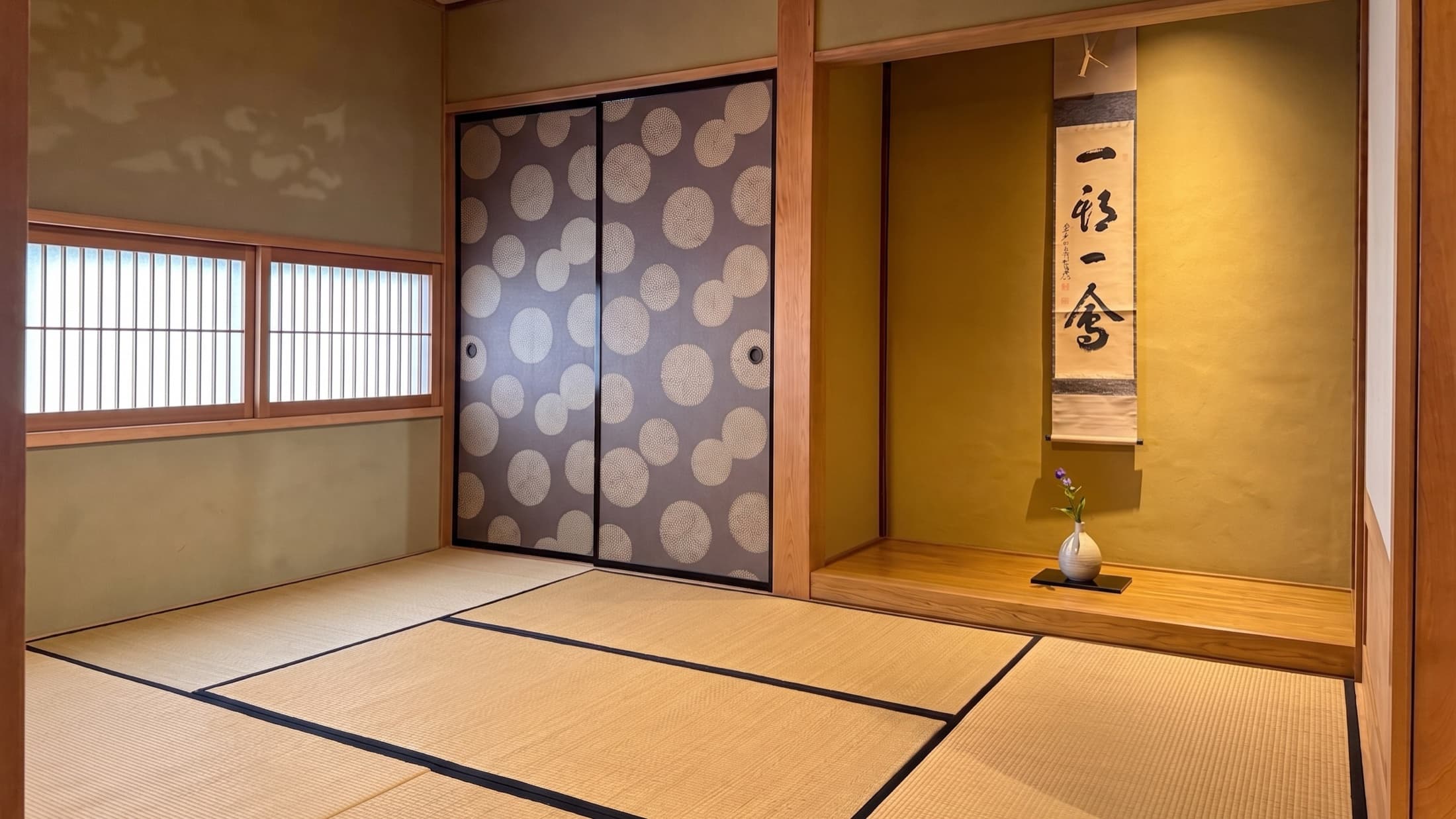
Authentic tea rooms are rare in New York, and the class is held in them. The proportions, the light, the distances — they are part of what you are learning.
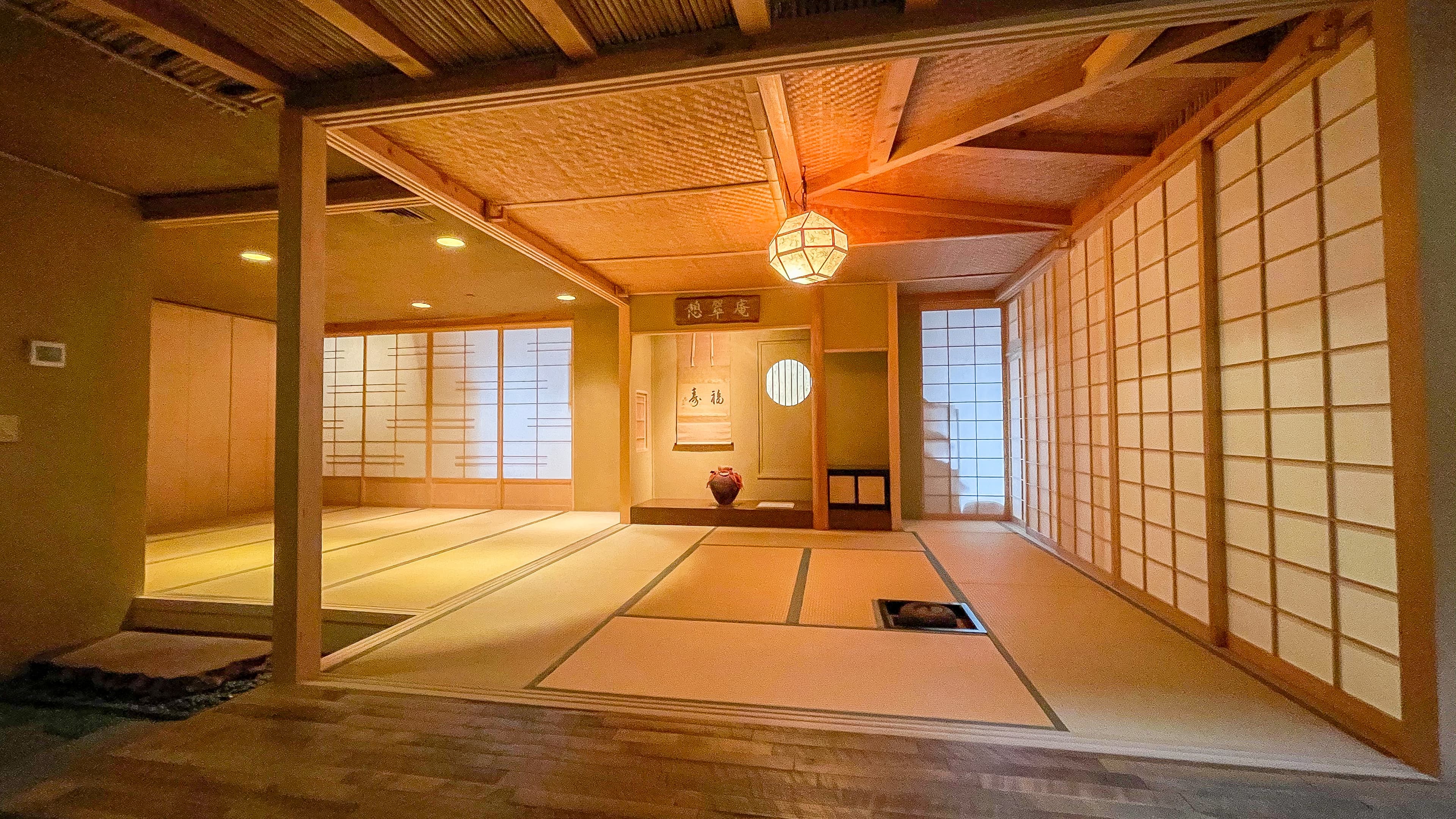
Manhattan / Semi-Private Class
Globus Chashitsu
889 Broadway, New York, NY 10003 (opens in Google Maps)Every Saturday
- Trial Lesson & The 10 Lessons
- $60 / lesson
- Advanced Practice
- $50 / lesson
Brooklyn / Semi-Private Class
Japan Village
934 3rd Ave, Brooklyn, NY 11232 (opens in Google Maps)Every Monday
- Trial Lesson & The 10 Lessons
- $60 / lesson
- Advanced Practice
- $50 / lesson
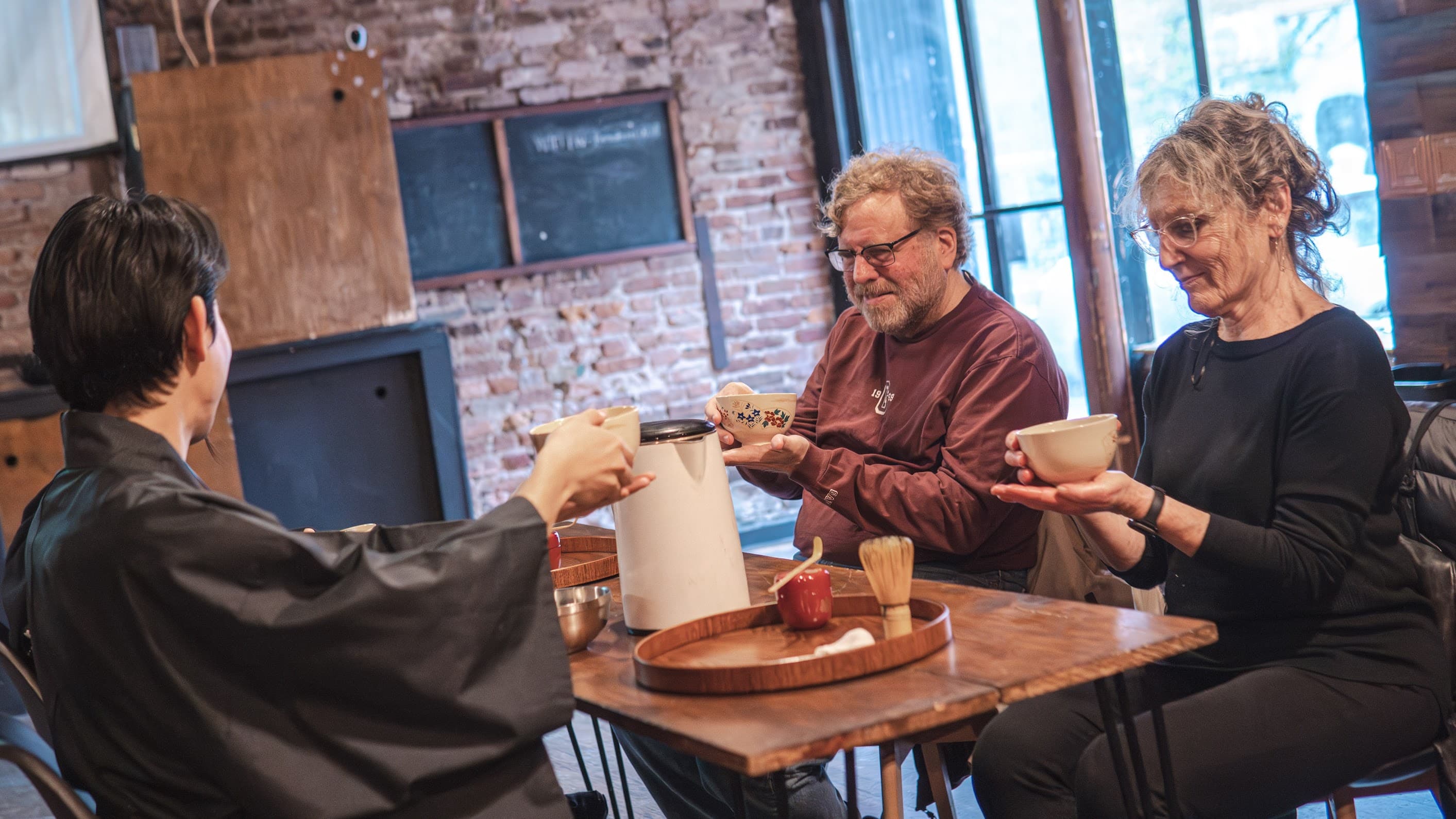
Manhattan / Table Style Class
Resobox East Village
91 E 3rd St, New York, NY 10003 (opens in Google Maps)Select evenings · 7pm–8:30pm · $60 / lesson
Before You Begin
Common Questions
Yes, absolutely. Most students begin with little or no previous knowledge of tea ceremony. The 10 Lessons is designed to be accessible to complete beginners. The instructor first demonstrates each movement and then guides you through it slowly, step by step. No prior knowledge or preparation is required.
Each lesson lasts two hours. Most students attend once a week. You can also attend twice a month and continue building on what your body has learned, although your progress will naturally be a little slower.
A comprehensive collection of video materials is also available, making it easy to review and practice at home at your own pace.
Lessons are taught in English. For students who prefer it, they can also be taught in Japanese. Japanese terms are used for the utensils and movements. Learning this vocabulary is part of the practice, but every new term is explained clearly as it is introduced. No knowledge of Japanese is required.
No. You are not expected to remain in seiza if it is uncomfortable. Seiza is the traditional way of sitting in tea ceremony, but it takes time for the body to adjust. While you are getting used to it, you may sit cross-legged or in another comfortable position. We also take breaks and stretch as needed, so please do not worry.
Ordinary clothing is perfectly fine. You do not need to wear a kimono.
Please avoid jeans or other clothing that may transfer dye onto the tatami. We also ask that you avoid sleeveless tops and very short skirts. Please bring a clean pair of white socks to change into. Watches, rings, bracelets, and other jewelry should be removed before entering the tea room, as they may damage the tea utensils.
No. You do not need to purchase any utensils for the Trial Lesson or The 10 Lessons. Everything required for the lesson—including the tea bowl, whisk, and matcha—is provided. When you move on to Advanced Practice, you will need to purchase your own fukusa (the silk cloth used to purify the utensils), folding fan, textbook, and other study items. We will guide you through what you need at that stage.
Yes. You are welcome to attend a single Trial Lesson. During the Trial Lesson, you will experience tea ceremony as a guest and learn the traditional way to drink matcha, along with the basic etiquette of the tea room. If the experience inspires you to continue learning, the next step is The 10 Lessons.
A kyōjō is a certificate granted by the Ueda Sōko school in recognition of your progress at each stage of study.
Obtaining a kyōjō is not required. Some students simply enjoy the practice of tea ceremony without pursuing certificates. For those who wish to study tea ceremony seriously over many years, however, each kyōjō marks an important milestone and recognizes the progress they have made.